|
Opposames — Political Theatre
Part of the “All the World’s a Stage” series
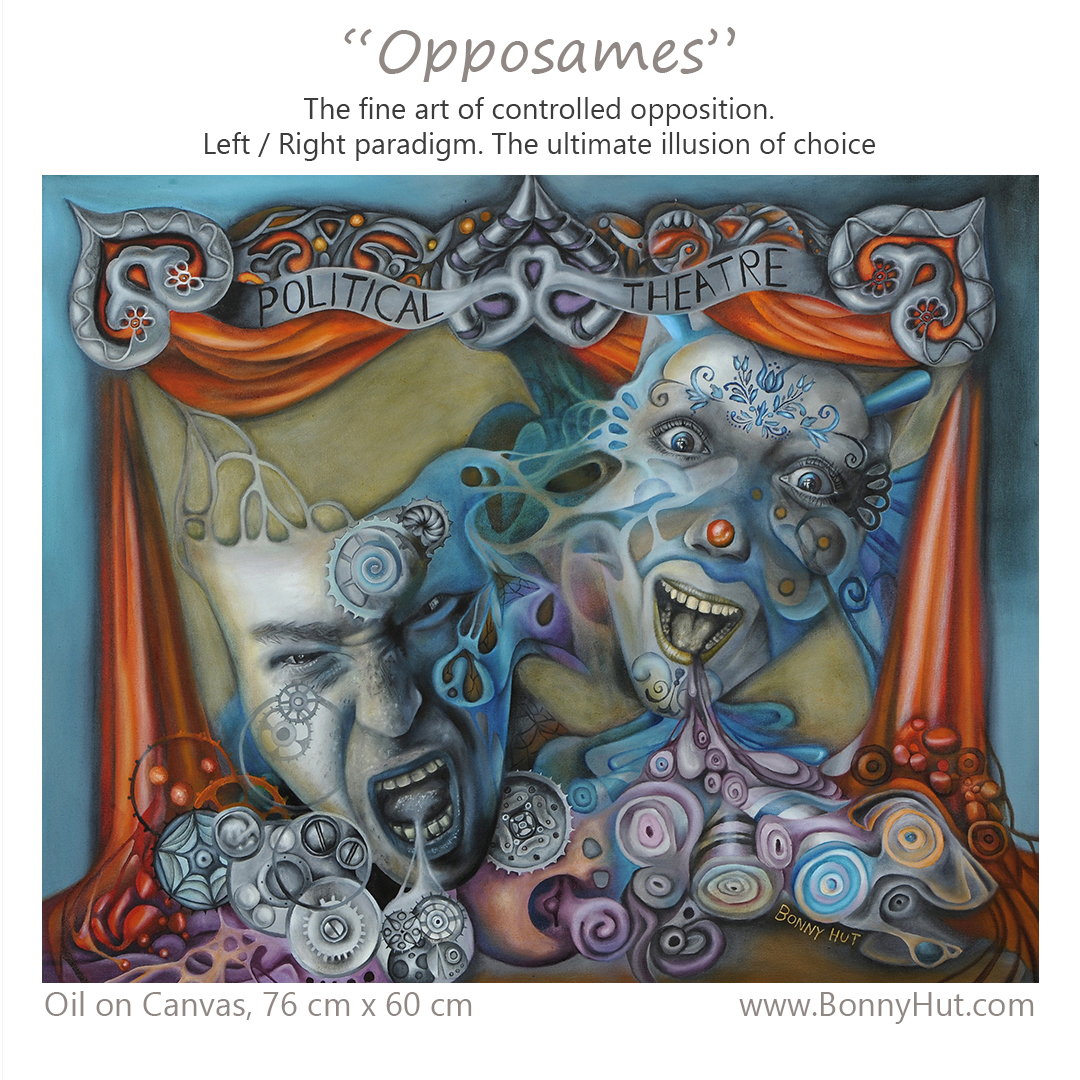
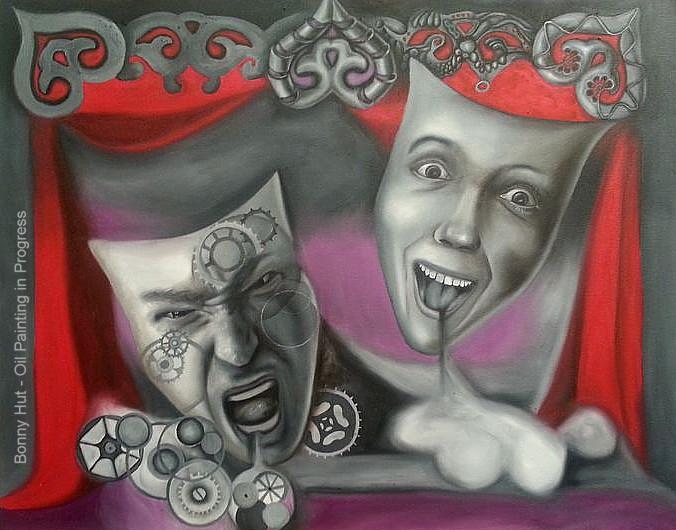
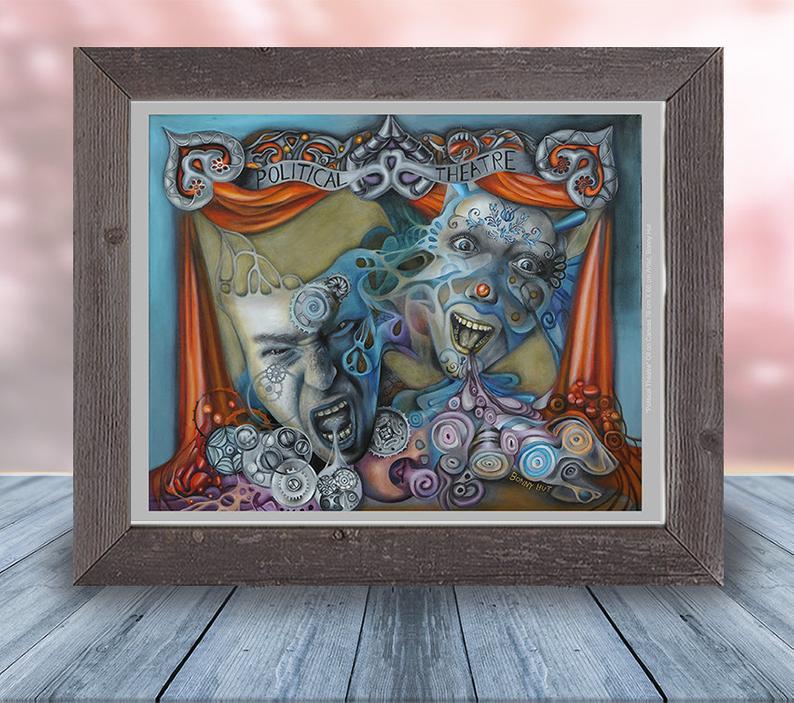
Behind the red curtains, the performance begins. Opposames
is a surreal exploration of political theatre, perception and the strange
relationship between apparent opposites.
Two larger-than-life theatre masks
dominate the stage—one carrying the anguish of tragedy, the other the
exaggerated grin of comedy. They appear to be opposites, yet they are bound
together within the same performance, facing the audience from opposite sides
of the same stage.
From the Tragedy mask emerges a tangled machinery of gears,
cogs and mechanical forms—a visual language of systems, mechanisms and forces
that operate beneath the surface.
From the Comedy mask flows an altogether
different collection of soft, colourful and almost sweet-looking forms.
Attractive, entertaining and seductive, they contrast sharply with the cold
machinery of the opposing character.
Yet both ultimately emerge from the same
theatrical space. Above them hangs the provocative title “Political Theatre”,
transforming the entire scene into a stage upon which opposing characters
perform their roles.
The painting explores the familiar Left/Right paradigm and
the idea of controlled opposition—not as a literal claim about how politics
operates, but as the artist's visual metaphor for questioning whether apparent
opposites always represent genuinely different choices.
The title Opposames
plays with the idea of opposites that are somehow the same: two sides that
appear fundamentally different while remaining part of one larger performance.
The viewer is invited to step back from the spectacle and ask: Where does
genuine choice end and the theatre begin?
With its mechanical forms, distorted
faces, theatrical symbolism and surrealistic imagery, Opposames invites the
viewer to look beyond the masks—to question appearances, examine opposing
narratives and consider what might be happening behind the curtain.
Perhaps the
most important question is not which side of the stage we choose, but whether
we ever stop to examine the stage itself.
|