|

|
Repainting the Script
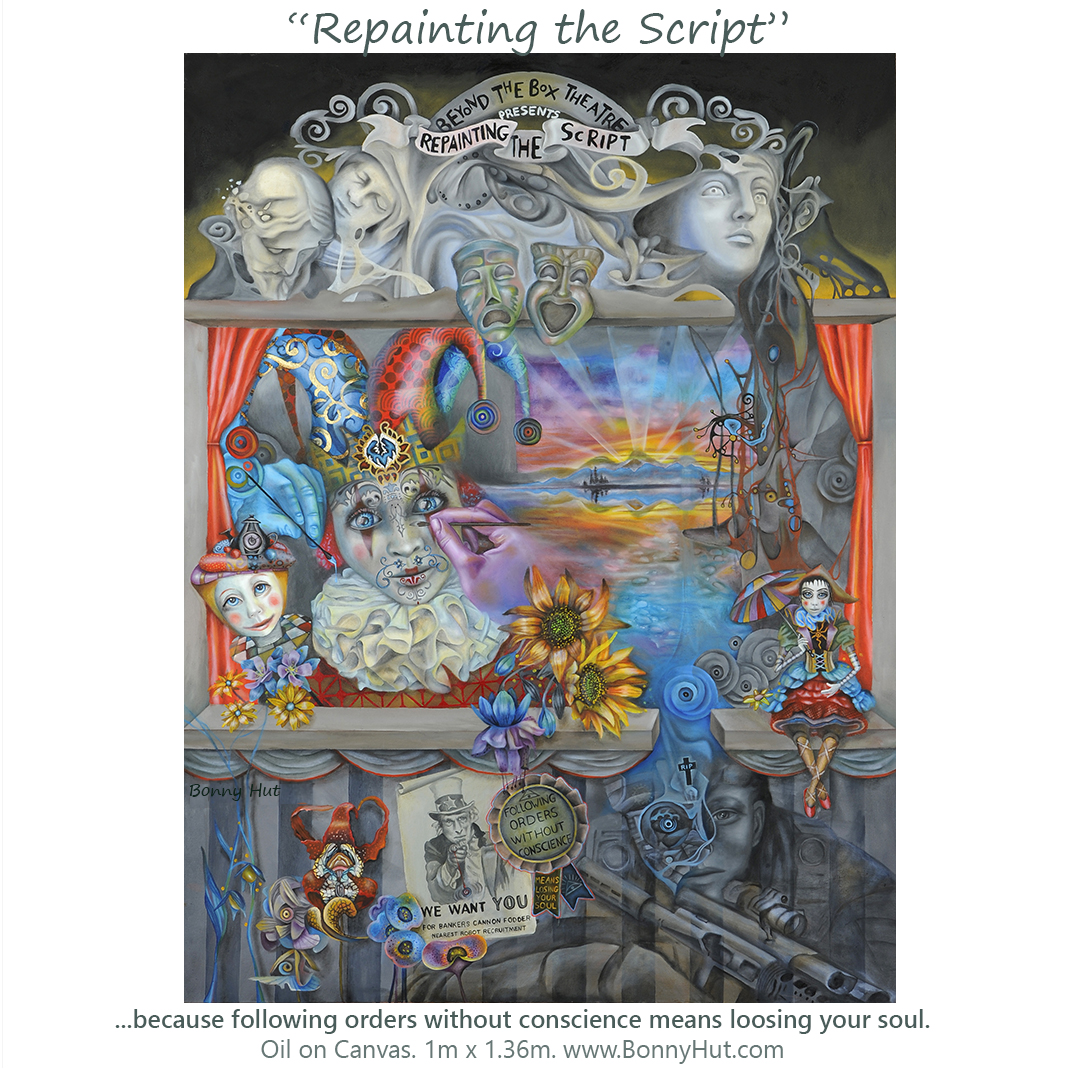
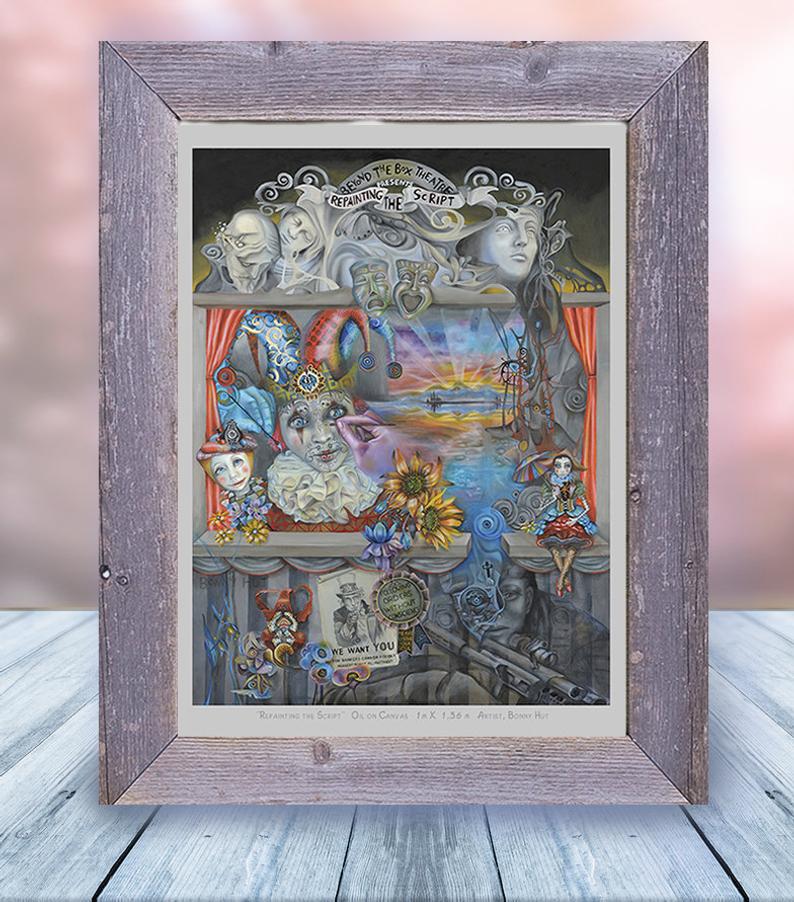
Eight months in the making, Repainting the
Script is a strange and theatrical journey into the mysterious territory
between fate and free will, obedience and rebellion, identity and
transformation. Behind its vivid colours and fantastical characters lies a
stage where nobody is quite sure who is the actor, who is the puppeteer — or
who wrote the script in the first place. At the very top of the theatre, a
banner announces: “Beyond the Box Theatre Presents: Repainting the Script.” Below
it, the stage comes alive.
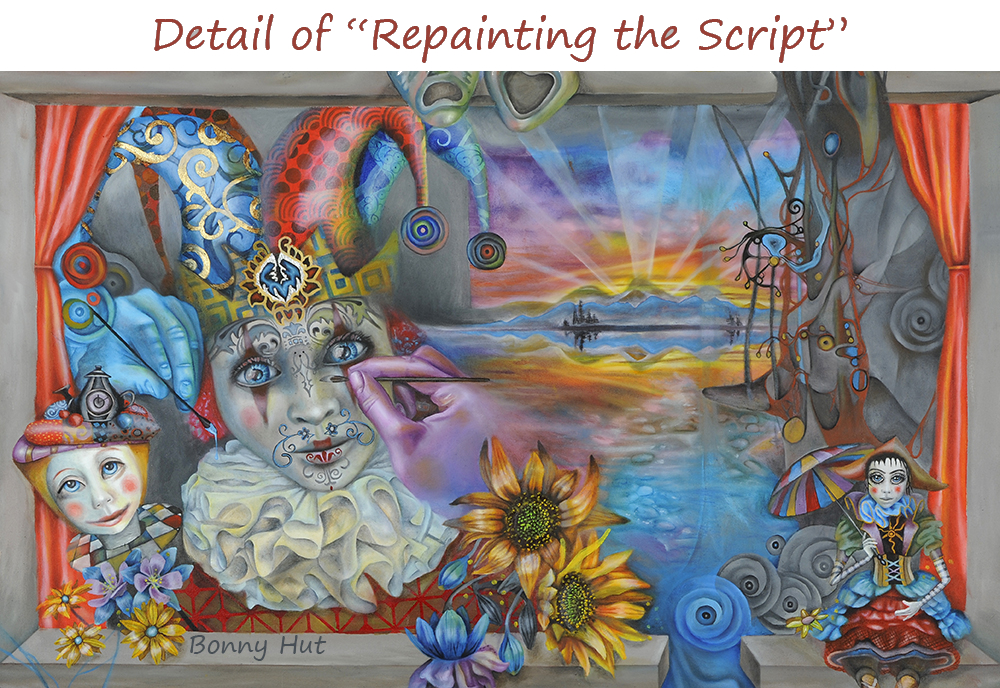
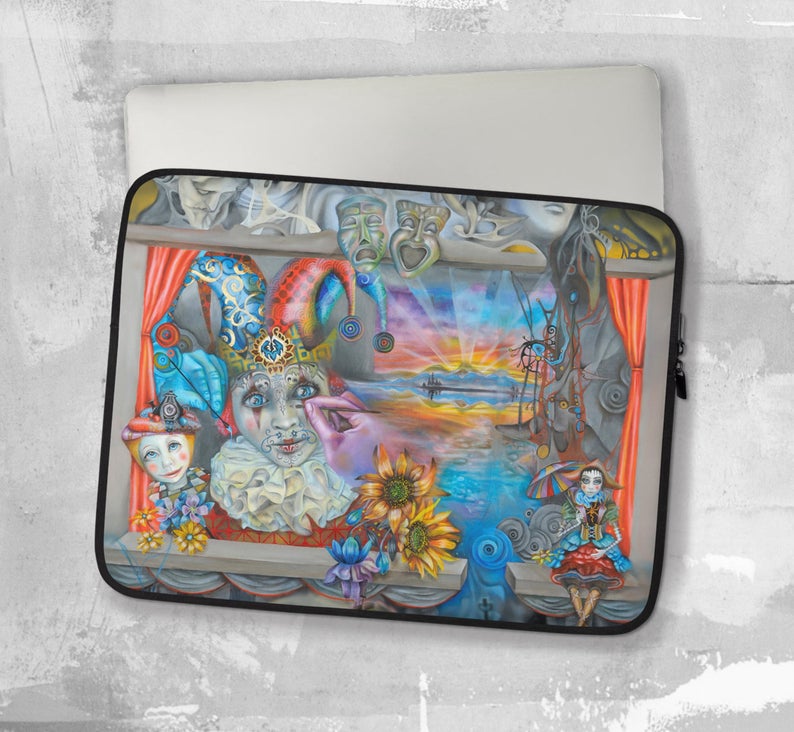
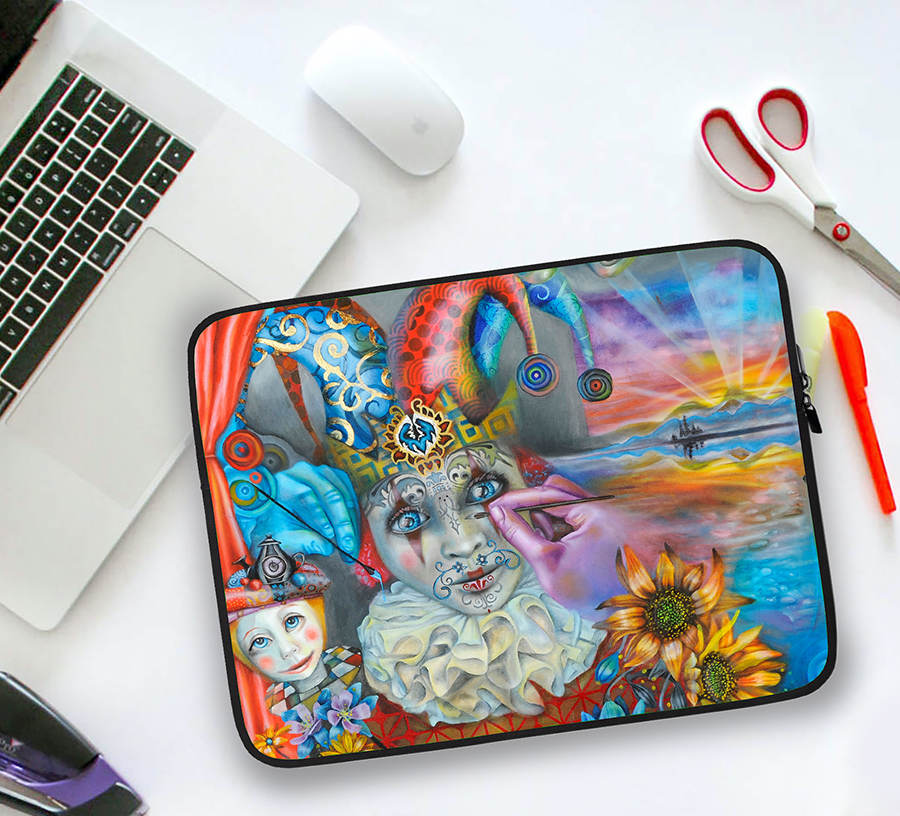
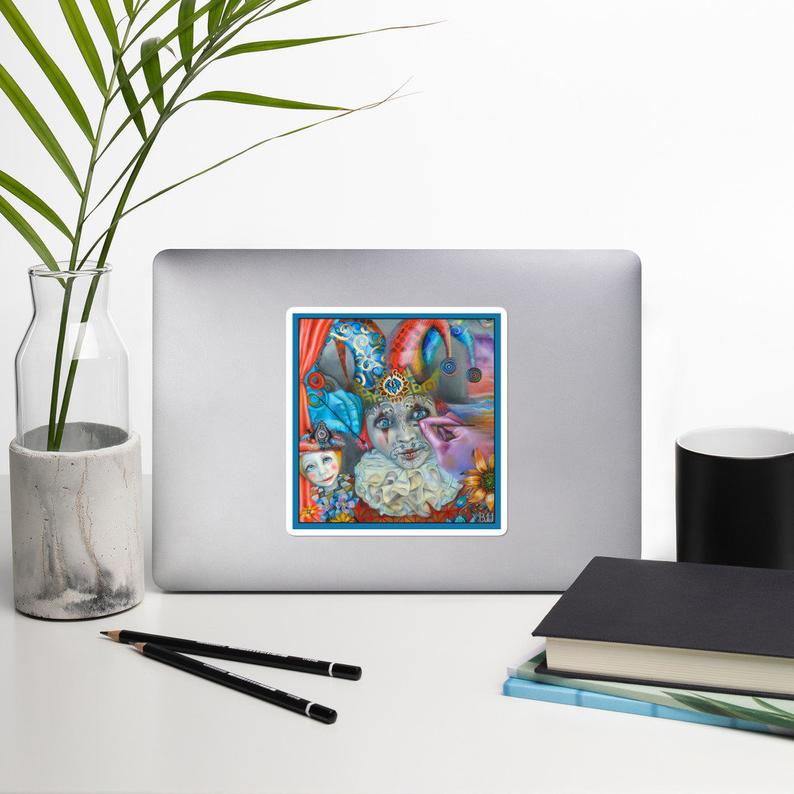
At its centre stands a brilliantly coloured
jester-like figure, caught in a moment of transformation. Two mysterious hands
reach into the scene, literally repainting the character. Is the figure being
liberated from an old identity, or manipulated into becoming something new?
The
glowing landscape behind them — somewhere between sunrise and sunset — suggests
that this moment could be either an ending or a beginning. The jester is
surrounded by masks, theatrical figures and strange observers. Above the stage,
the faces appear almost like an audience of spirits, watching the performance
from beyond the curtain. They seem to belong to another world — perhaps the
world of those who have already played their parts.
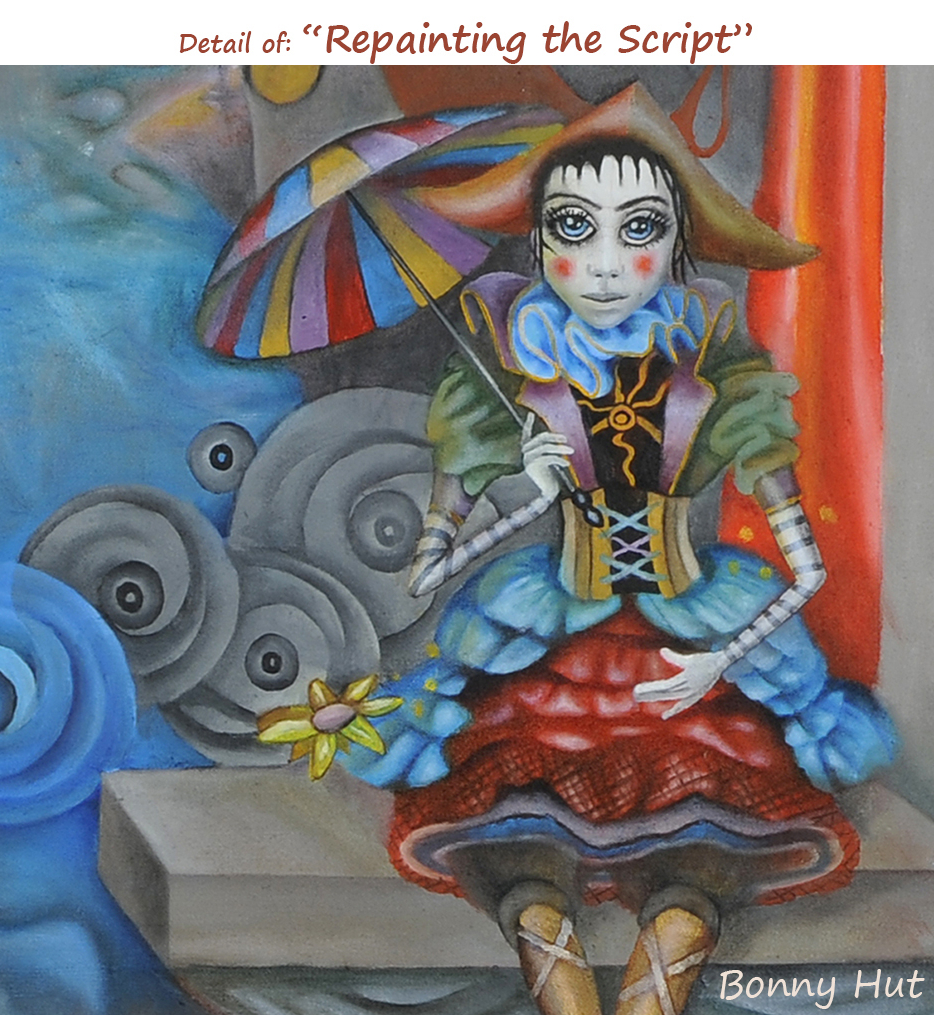
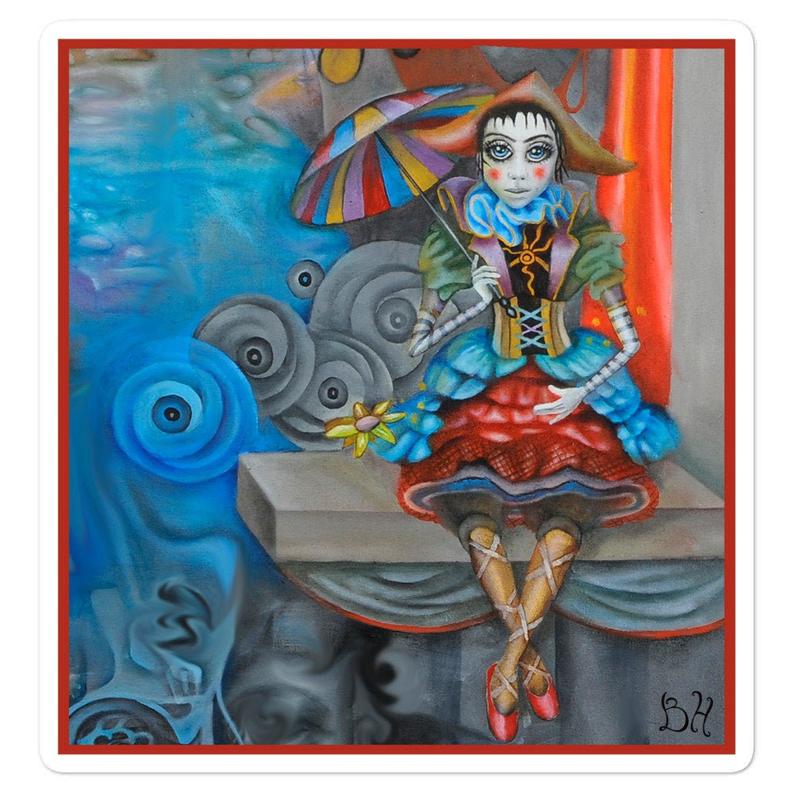
On one side of the stage
sits a small Pierrot-like clown, quietly holding an umbrella. While the central
figure undergoes transformation, this solitary character simply watches. Is the
clown a spectator, a fellow player waiting for their cue, or someone who has
already stepped outside the performance? Their stillness creates a curious
contrast to the turmoil unfolding around them. And then there is the soldier.
Embedded
within the lower structure of the theatre, the soldier appears to be both part
of the stage and trapped inside it, merging with the architecture itself. His
presence connects the fantastical upper world with the darker reality beneath
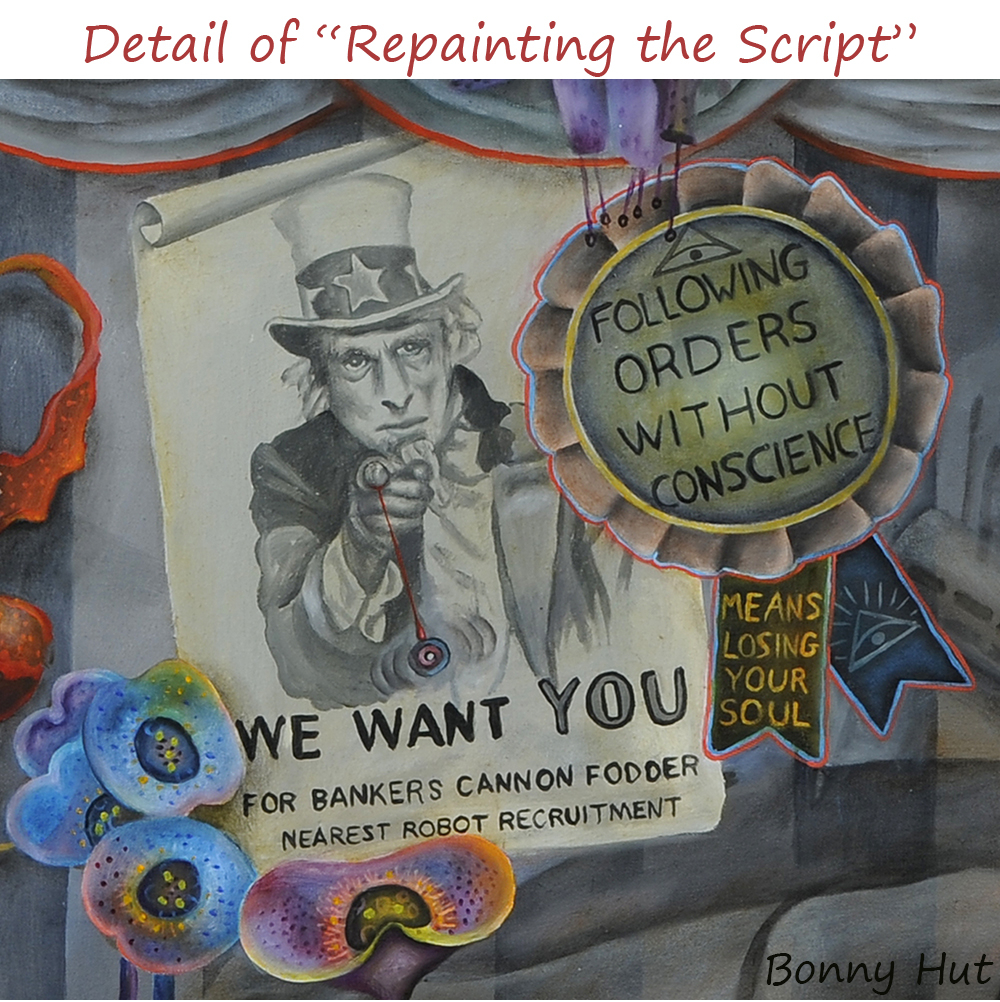
it. Nearby, a vintage propaganda-style sign declares: “WE WANT YOU FOR BANKERS
CANNON FODDER” Beside it hangs a badge bearing the words: “FOLLOWING ORDERS
WITHOUT CONSCIENCE MEANS LOSING YOUR SOUL.”
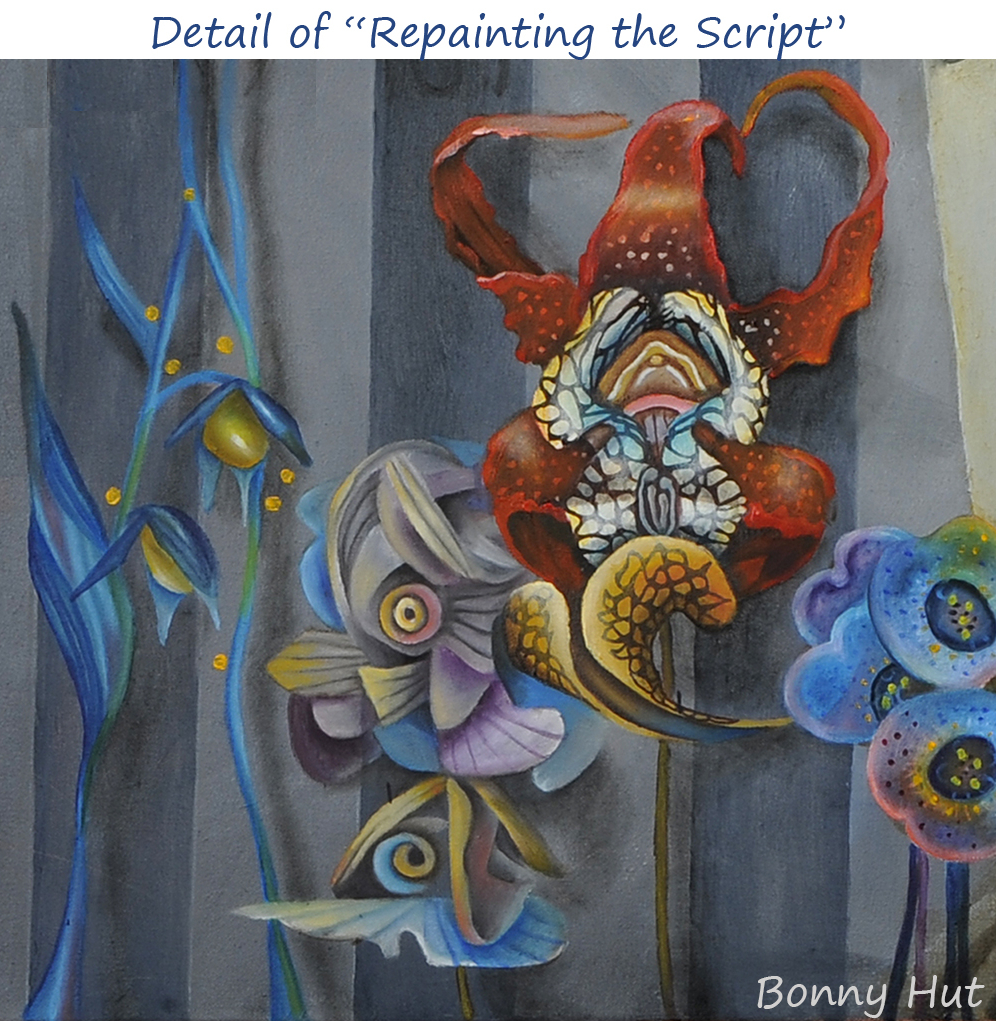
Around these stark symbols grow
bizarre, dreamlike flowers and fantastical forms, as though imagination itself
is attempting to reclaim the machinery of the stage. The entire painting
becomes a theatre within a theatre — a world of masks, roles, instructions,
transformation and hidden forces.
The characters appear connected, yet each
seems caught in a different relationship to the invisible script. Some perform.
Some watch. Some obey. Some transform. And perhaps some are beginning to
realise that they have the ability to change the story. But who is actually
writing the script? That question is deliberately left unanswered.
Repainting
the Script does not prescribe a single interpretation. It invites the viewer to
wander through its strange collection of characters, symbols and visual clues
and construct their own story. The theatre may represent society, politics,
identity, consciousness, destiny — or something far more personal. Perhaps the
jester is you. Perhaps the hands are yours. Perhaps the stage is the world we
inherit, and repainting the script is the moment we realise that it doesn't
have to remain the same.
Part of Bonny Hut's “All the World is a Stage” series,
this surreal oil painting explores the theatrical nature of existence through a
deliberately eccentric cast of characters, symbolic objects and dreamlike
imagery. After eight full months of painting, layer upon layer of detail has
transformed the canvas into a visual puzzle — one that reveals something different
depending on where the viewer chooses to look.
A painting about roles, choices,
consciousness and transformation — but ultimately, the meaning belongs to the person
standing in front of it. |
|